
You Do Not Have to Know Everything Immediately
It is tempting to decide very quickly whether a date has potential. Sometimes the answer is obvious. Other times, the first meeting is simply an introduction.
Nerves can make people quieter than usual. A busy restaurant can interrupt a conversation. Two people might need a little time to become comfortable with one another.
A first date does not need to be perfect to be worthwhile.
Instead of asking yourself whether this person could be your future partner before the appetizers arrive, try a simpler question: Do I feel comfortable enough to learn more about this person?
Are you enjoying the conversation? Do you feel respected? Is there some curiosity about what another meeting might be like?
You do not have to manufacture chemistry, but you also do not need to demand an instant fairy tale.
Learn to Recognize Red Flags
A red flag is a warning sign that a person’s behavior may indicate a serious problem or an unhealthy relationship dynamic.
Examples can include repeated dishonesty, disrespect toward others, controlling behavior, pressure to ignore your boundaries, or attempts to make you feel guilty for expressing reasonable needs.
Pay attention when someone consistently dismisses your opinions, becomes hostile when you disagree, or pushes for personal information or intimacy before you are comfortable.
One awkward moment does not necessarily define a person. What matters is the nature of the behavior, its severity, and whether it becomes a pattern.
You are not responsible for explaining away conduct that makes you feel unsafe or disrespected.
It is also important to distinguish red flags from ordinary differences. Someone having different hobbies, a different communication style, or a different favorite restaurant does not automatically mean you are incompatible in every meaningful way.
The goal is not to find a flawless person. It is to recognize whether the relationship has the ingredients for mutual respect and emotional safety.
Yellow Flags Deserve Attention, Too
Not every concern requires an immediate decision to end a connection. Some situations call for observation, conversation, and clarification.
These might include inconsistent communication, uncertainty about relationship goals, different expectations about how often to meet, or a lifestyle that may not fit comfortably with yours.
Think of these as reasons to ask questions rather than jump to conclusions.
For example, if someone communicates less frequently than you prefer, discuss what communication means to each of you. If you have different ideas about commitment, find out whether those differences can be reconciled.
A concern becomes more significant when it is ignored, repeatedly dismissed, or handled without respect.
Healthy dating does not mean avoiding every difficult conversation. It means being able to have those conversations honestly.
Pay Attention to How You Feel Around Someone
When evaluating a potential relationship, it is easy to focus entirely on whether the other person likes you. But your own experience matters just as much.
Can you express your opinions without worrying about being ridiculed? Do you feel that your time and boundaries are respected? Can you be yourself, or do you feel compelled to perform a version of yourself that you think the other person will prefer?
Attraction can make it tempting to overlook incompatibilities. The desire for companionship can also make people stay in situations that do not meet their needs.
Take time to consider whether you like the person you are when you are with them.
A promising relationship should leave room for both people to be individuals, communicate honestly, and make choices without fear or pressure.
Rejection Is Not a Verdict on Your Worth
Not every first date will lead to a second. Sometimes the interest is mutual; sometimes it is not. Occasionally, a conversation that seemed promising will simply fade away.
Disappointment is understandable, especially when you have invested time and hope in a connection.
But a lack of compatibility does not mean you have failed.
Two people can be good individuals and still not be right for one another. They may want different things, have different priorities, or simply not experience the connection they hoped for.
You do not need to convince everyone to choose you. You need to discover whether the interest, respect, and intentions are mutual.
When a connection does not work out, reflect on what you learned, give yourself room to move forward, and resist the urge to turn one experience into a rule about every future relationship.
Experience Can Be a Valuable Teacher
Dating later in life often means arriving with a clearer understanding of yourself than you had when you were younger. You may know which values matter most, what compromises you can make, and which boundaries you do not want to abandon.
That knowledge can help you make more thoughtful decisions.
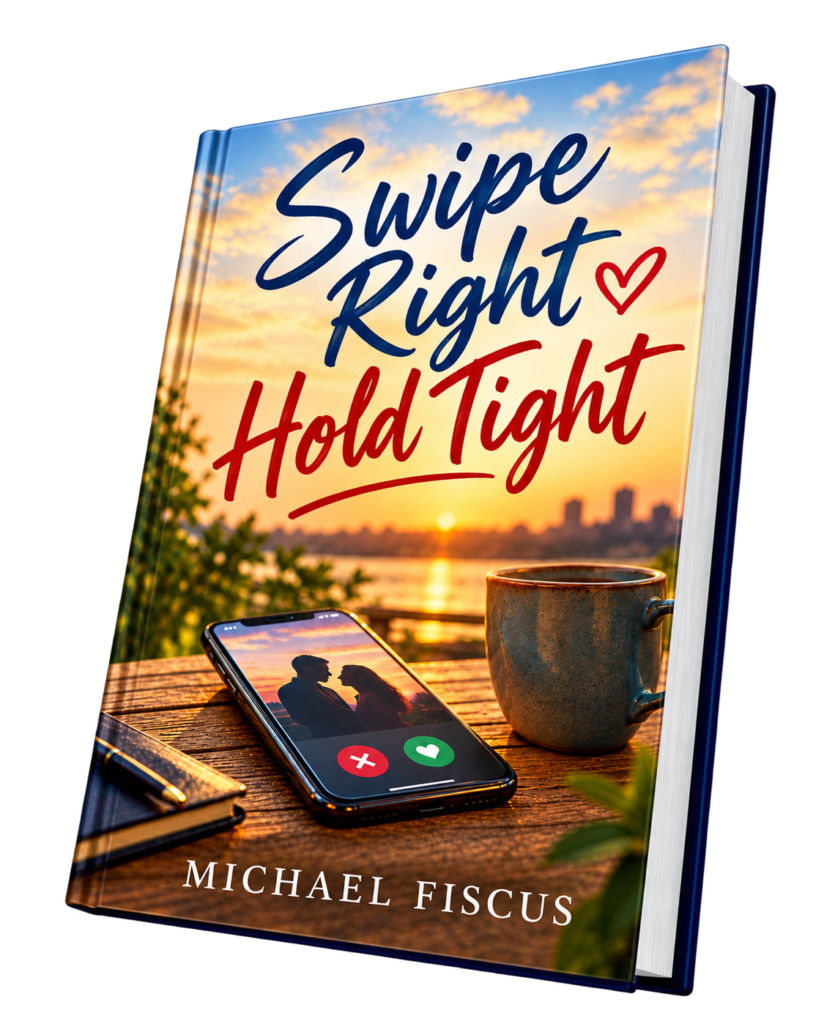
Michael Fiscus’s Swipe Right Hold Tight explores the realities of dating after fifty through firsthand experiences, memorable encounters, and lessons learned along the way. His journey illustrates that finding connection is rarely a perfectly predictable process.
There will be surprises. There may be disappointments. There may also be moments that remind you why meeting someone new can be worth the effort.
You cannot control every outcome, but you can choose to approach dating with honesty, curiosity, self-respect, and a willingness to learn.
The best lesson from a first date is not always that you have found the right person. Sometimes it is that you understand yourself a little better than you did before.